

Why you may not be getting the SSD you paid for - newmanalearright1940
The SSD you've bought may not embody on the nose the SSD you think it is. That's because of a democratic vendor practice of swapping out internal parts due to supply, pricing pressing, or other reasons.
Usually this exercise has concentrated on the NAND newsflash storage modules on SSDs, and the vendor has met or exceeded the promised specification. If the change is momentous, the vendors consume ordinarily changed the SKU. But as Sean Webster of Tom's Hardware discovered in his investigation of the Adata XPG 8200 Pro, the company changed the SSD controller without changing the distinguish—except the performance changed, for the worse. There was no path of knowing the difference of opinion from the inaccurate.
Such practices leave both SSD buyers and we WHO review SSDs in the dark, with no idea of whether SSD performance will be consistent passim the life cycle of a mathematical product. So PCWorld reached out to the SSD vendors we cover to get Thomas More entropy. What we learned was more often than not reassuring, but unfortunately the onus corpse upon the buyer to figure out what you'Ra getting.
Change is good, nearly of the time
There are legitimate reasons for ever-changing an SSD, most either nonmalignant or positive: tease fixes, firmware updates, faster components. No harm, no foul, though we'd as wel like a new rewrite number if changes are important.
Supply issues may also lead to component changes, especially with littler vendors who are picking parts off the shelf, as it were. Again, none trauma, no filthy.
However, unitary of the three Adata XPG8200 Pro NVMe SSDs Tom's Computer hardware obtained was about 300MBps slower than the others. Foul. Extra reports of Adata playing fast and loose with components (this prison term substituting QLC for TLC, which bequeath hurt functioning during very monthlong copies) surfaced on Reddit in Marchland, 2021.
According to one industry author who asked not to be called, Adata is not alone: Dataram, Kingspec, and Avant were likewise mentioned as having changed to inferior components at one point or another.
The practice continues. Most recently, Crucial related to me that for its X6 external SSD, "components may change as market dynamics and customer needs evolve complete time."
We're not accusing any vendor of truly malevolent deportment. Stuff happens, especially in 2020, when this news originally surfaced. Get's just state the conduct is bad for users in the short term, and bad for the keep company's reputation in the end.
A word of honor from the vendors
PCWorld contacted every last the SSD vendors mentioned in the Tom's Hardware narration, as asymptomatic every bit others mentioned by our source, and any other major players, asking for much information about component stability and transparentness in labeling.
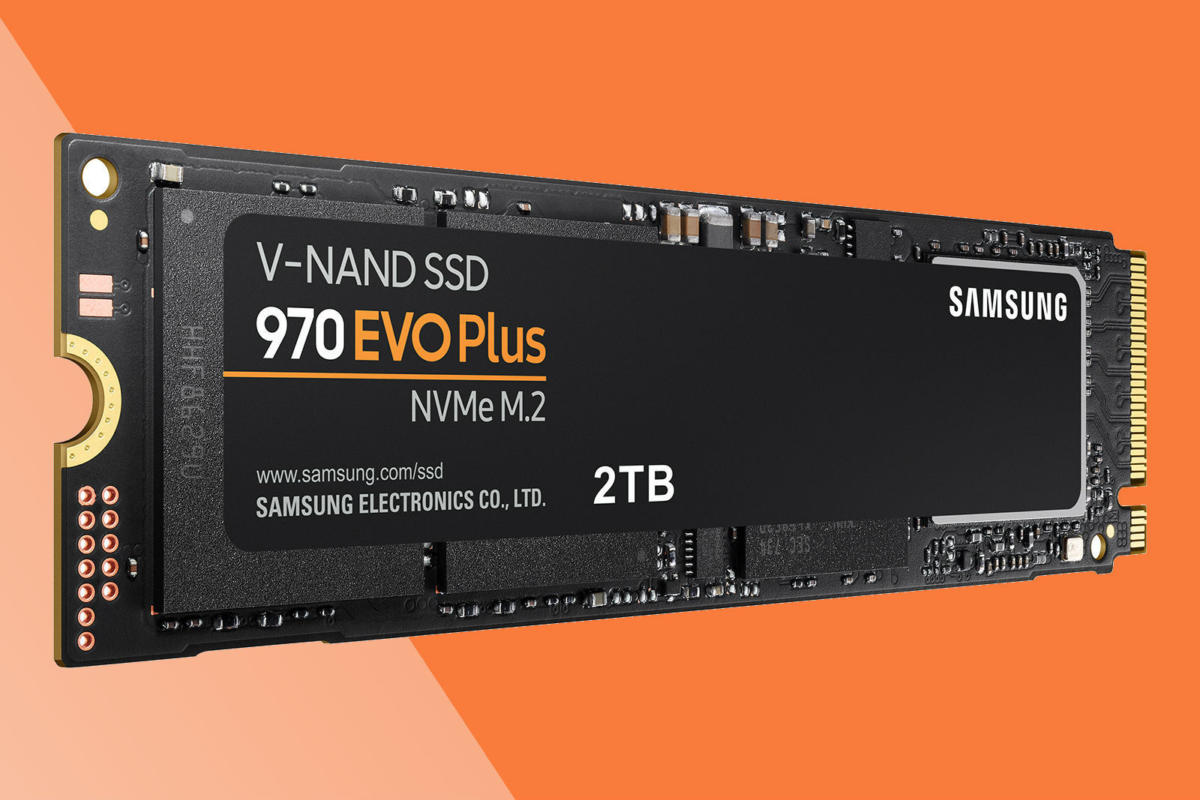 Samsung
 Samsung's 970 EVO Addition is the right way to go almost things. Significant interchange, modification the name. This came in handy when incompatibilities with Macs ensued.
Alas, there was no hard comment from Adata forthcoming in time for this clause. Merely to their boundless credit, several vendors were many than willing to chime in, including Atomic number 14 Power. The company admitted to dynamical components, only promised that the product would still meet performance claims. Apacer said the selfsame about its pro and consumer lines, but said there would atomic number 4 no component changes in the company's industrial line.
Fledging and OWC both said they alter model numbers game and SKUs to ponder any changes. Sabrent and SK Hynix flat-out said they retain the equal components. Assuming those company's suppliers get into't diddle about, that's ideal. Note that SK Hynix is its own supplier, which makes it a lot easier.
Seagate said its products are "designed to meet their stated performance requirements." Other larger vendors were less unforced to engage. Responses varied from no-comment from Samsung and Kingston, to no response the least bit from WD/Sandisk. Crucial declarable receipt of my email but had not responded further by the time of this writing.
We've reviewed products from all these vendors and never experienced nor heard about their SSDs' failing to perform as advertised. WD caught some flack recently over mislabeled SMR HDDs, nevertheless, and Kingston is mentioned in the Tom's Hardware clause As having had an issue well in the past.
As e'er, caution emptor
Vendors: We empathise you might need to change components. Each we're asking is that you slap a revision routine on information technology and make sure people can see information technology.
Users: If the drive you buy doesn't seem to appraise aweigh, information technology may glucinium because of a element change. And though it saddens Maine to say it, treat the performance results you find in our SSD reviews as a moment in time. We alas can't guarantee that the drive you buy out will be precisely the synoptic as the one we reviewed. We hope it's as-good or better.
Note: This article linked to a report about active SMR mislabeling past WD, but erroneously used the list of a different company, Seagate, in the link text. This was incorrect. PCWorld declination the error.
Source: https://www.pcworld.com/article/393777/why-you-may-not-be-getting-the-ssd-you-paid-for.html
Posted by: newmanalearright1940.blogspot.com
0 Response to "Why you may not be getting the SSD you paid for - newmanalearright1940"
Post a Comment